
April 14, 2026
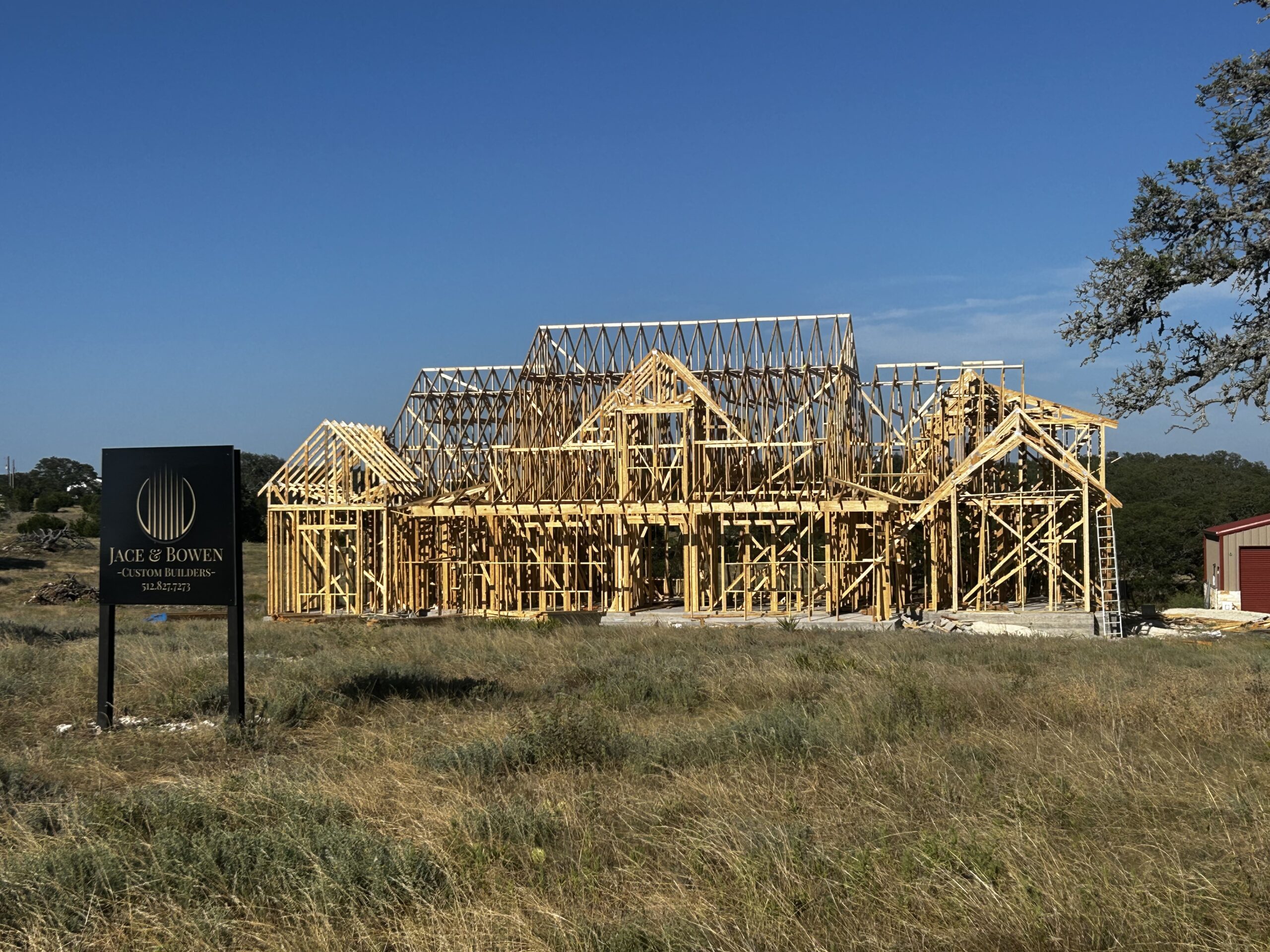
Jace & Bowen breaks down the price per square foot of a custom home in areas like Liberty Hill, Georgetown, Burnet, and Lampasas.
Here’s the honest answer: It depends. Most fully custom homes in Central Texas usually start at a price per square foot of around $250 to $400+, but that number doesn’t really give you a full picture.
We hate to be that builder but, truly the cost of the total home depends on a lot of factors! Your land, foundation needs, floor plan, finish level, utilities, and how custom the home really is will all affect your bottom line. Recent Austin and Hill Country market sources commonly place full custom construction somewhere in the roughly $300 to $500 per square foot range before land purchase and major site-specific costs are added in, which is exactly why a quick square foot quote can be really misleading.
That is why at Jace & Bowen, if you call to ask us “what is the price per square foot of a custom home?” we like to guide you through a more in depth answer. We do not like treating custom home pricing like a quick math problem. Two homes with the exact same square footage can be in very different price ranges depending on the factors involved with building them with quality and with the design choices you picked.
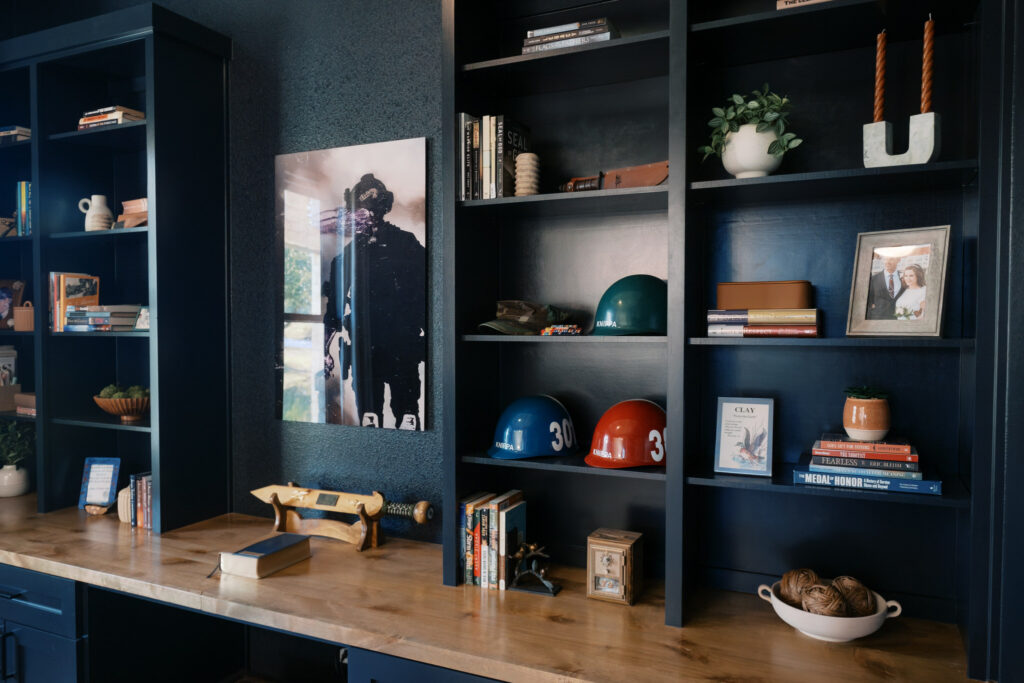
In Central Texas especially, terrain and lot conditions matter. The Hill Country is known for rugged topography, steep changes in grade, and exposed limestone1, all of which can affect excavation, drainage, foundation strategy, driveway work, and retaining needs before you ever get to picking your cabinets or tile. It’s important to keep this in mind if you’re planning a custom home in Liberty Hill, Lampasas, or Burnet. The land comes with its fair share of challenges that most people aren’t expecting.
In many Central Texas and rural Hill Country areas, custom homes also need on-site wastewater planning, because about 1 in 5 new homes built in Texas rely on an individual wastewater treatment system, and Texas requires a permit and approved plan for an on-site sewage facility. That means your lot itself can shape the budget in a very real way, especially if septic layout, utility runs, or drainage solutions are more involved than expected.
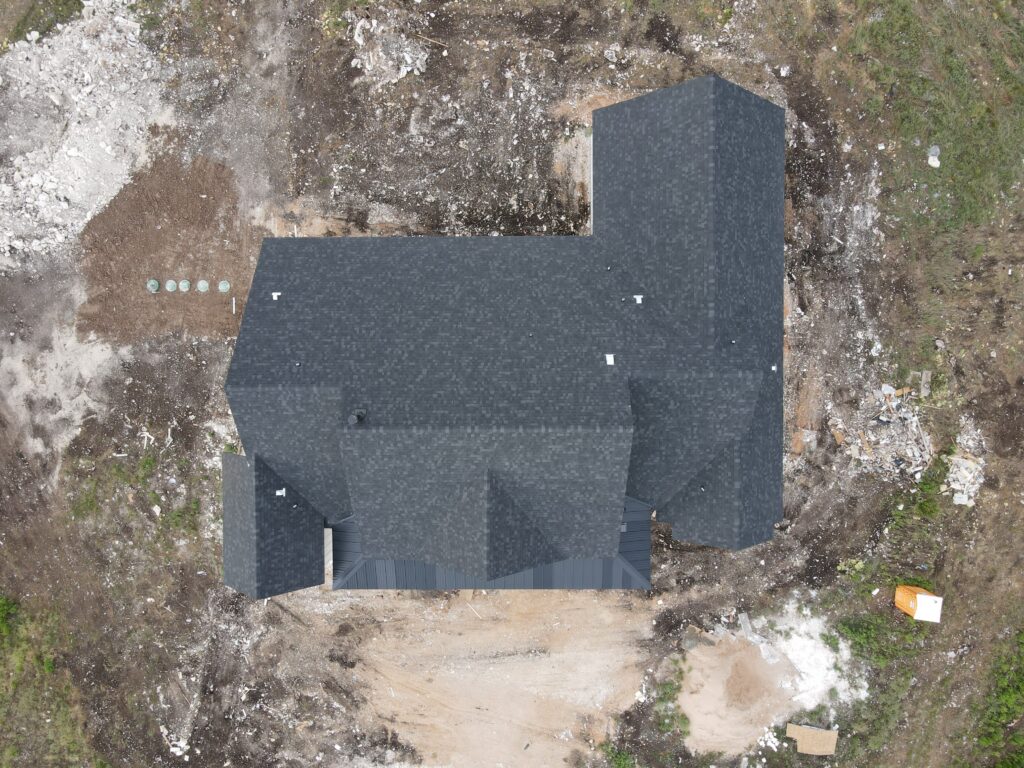
The bigger point is this: “price per square foot” is a good metric to look at, but it is not the whole story and certainly not how we present your estimate to you. National home construction data shows cost is spread across categories like interior finishes, rough-in systems, framing, exterior finishes, foundations, and site work.2 In other words, the price of a custom home is built from layers, not just from the number of total conditioned living space on your plan.
Why the “price per square foot” question is only part of the story
We don’t want you to get too deflated, a square-foot number is extremely helpful for early planning, but it is not reliable enough to build your entire budget around and certainly not going to help you choose the right builder for your project.
Think about it this way. Asking for the exact cost of a custom home by square foot alone is a little like asking what a vehicle costs by the pound. It ignores the parts that actually make one build simpler, smarter, or more expensive than another.
Let’s break down some of biggest cost drivers we like to walk families through instead of just giving a price per square foot:
| Cost Driver | Why It Matters for a Custom Home | What It Can Do to the Budget |
|---|---|---|
| Lot conditions | Slope, rock, drainage, trees, soil, and accessibility affect how hard the site is to build on. | Can raise excavation, foundation, driveway, and drainage costs. |
| Foundation requirements | A flat slab on a simple lot is very different from a foundation designed around slope or poor soil conditions. | Can change structural cost quickly. To give you a real-life example, we recently completed a custom home in Lakeway on a lot with an extremely technical slope that added a 78% increase to their foundation and structural budget. We try very hard to minimize these budget “surprises” by not quoting simply by price per square foot. |
| Home size and shape | Bigger homes cost more, but complicated layouts can raise cost faster than square footage alone. | More corners, rooflines, and structural transitions usually mean more labor and materials. |
| Single-story vs. two-story | A sprawling one-story home often requires more foundation and roofing than a more compact two-story plan. | Can push cost per square foot higher, even though it’s a one story custom home. |
| Finish level | Cabinets, flooring, windows, appliances, plumbing fixtures, and trim all move the budget. | One of the biggest drivers of the final number is the design selections you decide to go with. Many builders will start your custom home at a certain “tier” level for design selections and then any changes incur steep change order fees. Some neighborhoods require certain styles and colors of exteriors too. |
| Outdoor living | Covered patios, outdoor kitchens, fireplaces, pools, and sliders are part of the custom home many of our homeowners envision. | Often treated like “extras,” but they add more than just an “upgrade” price tag. Some of these line items add real structure and systems costs as well as more design choices. |
| Utilities and rural infrastructure | Wells, septic, electric runs, propane, and long driveways are common on build-on-your-lot projects | Can create meaningful, and often the dreaded “hidden,” costs outside the house itself. |
A more realistic way to think about custom home cost in the Central Texas communities.
Here is a better planning framework we recommend as you begin working out the initial logistics of your custom home.
1. Start with a construction range
For early planning, this could look something like this:
| Custom Home Level | Planning Range | What That Usually Looks Like |
|---|---|---|
| Straight-forward semi-custom | $250 to $300+ / sq ft | Simpler layout, more controlled finish selections, less complex site. |
| Mid-level fully custom | $300 to $350+ / sq ft | Higher quality finishes, stronger personalization, more outdoor living options included |
| High-detail custom | $350 to $400+ / sq ft | Elevated materials, more custom millwork, upgraded highly efficient windows and solar options, more architectural detail |
| Luxury / highly bespoke | $400+ / sq ft | Heavy customization, complex architecture, premium finish packages, major outdoor features |
Remember, these are planning ranges not promises. There are plenty of homes that we would classify their design selections as high-detail but their land was good to us and provided no complexities. It’s all variable, but we know everyone loves to look at the numbers!
2. Separate the house budget from the land budget
A lot of families accidentally combine these too early and that’s where the “hidden costs” come and bite you later. When you ask “what does a custom home cost?” of your potential builder make sure you know whether they are talking about:
- the house only
- the house plus site work
- the house plus land development
- or the full project, including design, permitting, utilities, and outdoor features
Those will be very different numbers.
3. Expect the lot to change the math
We can’t emphasize this enough, this is especially true in the Hill Country areas of Liberty Hill, Lampasas, Burnet, Lakeway, and Marble Falls.
A flatter, easier lot with nearby utilities will usually produce a cleaner budget than a beautiful but more demanding homesite with slope, rock, long utility runs, heavy clearing, or complicated drainage. We see that a lot on homesites we build custom homes on frequently, like Burnet and Lampasas, where the land itself can change the budget faster than most people expect.
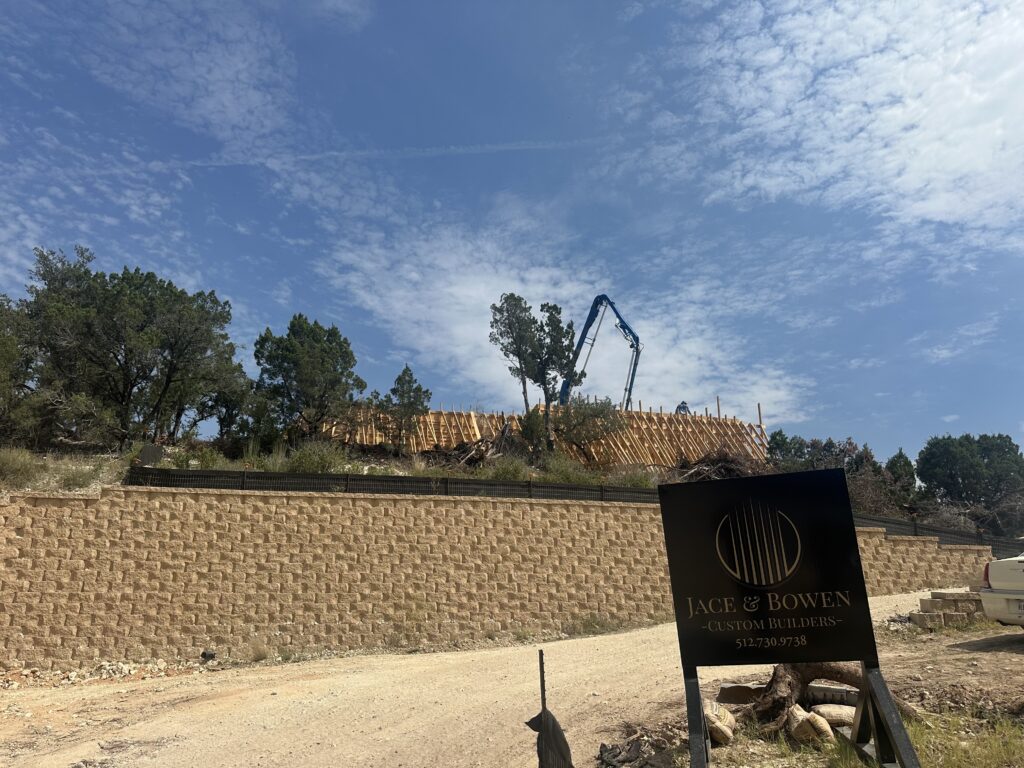
Around here, we tend to see these cost differences show up in different ways depending on where the project is. Here are examples from areas we frequently build in: Far north areas like Burnet and Lampasas, the land itself can be a major factor, especially if you plan to add pools. For Florence and Liberty Hill, build-on-your-lot planning and utilities might hit your budget more than you expect. In places like Lakeway and Georgetown, we see a lot of emphasis on outdoor living, glass, and architectural detail and as you can imagine, that can start shaping the budget pretty quickly.
We’re still having the same conversation about budgets, but the pressure points can look a little different depending on the custom home and where it is built.
Two homes can be the same size and cost very different amounts
Here is a simple example.
| Same Square Footage, Different Budget | Home A | Home B |
|---|---|---|
| Living area | 3,200 sq ft | 3,200 sq ft |
| Layout | Compact plan with straightforward room transitions | Wide-sprawling plan with multiple jogs |
| Lot | Flat and accessible | Sloped lot with rock, lots of clearing and drainage work |
| Utilities | Simple connections | Longer utility runs, possible septic complexity |
| Windows and doors | Standard package | Large glass, sliders, more openings |
| Outdoor living | Basic covered patio | Outdoor kitchen, expanded entertaining space |
| Result | Lower cost per sq ft | Higher cost per sq ft |
That is why builders who care about accuracy do not throw out a random number after one phone call. It’s important to us to understand the full scope of the project before we just give you a number to win a bid.
What is usually included in a custom home budget, and what is often separate?
Usually part of the construction budget:
- Foundation
- Framing and roofing
- Windows and exterior doors
- Electrical, plumbing, and HVAC
- Insulation and drywall
- Interior finishes
- Cabinets, counters, and flooring
- Standard patio allowances, if specified
Often separate or needs clarification:
- Land Complexities
- Surveying and some design fees
- Site clearing and heavy excavation
- Septic, well, or special utility extensions
- Driveways and major retaining walls
- Pool, spa, and large outdoor hardscape
- Furniture and appliances beyond allowance
- Upgrades added after pricing
Here’s what Jace & Bowen likes to start with when estimating cost for your custom home
1. The lot is going to shape more of the project than most people realize
A lot of people want to start with the floor plan, which makes sense, but before we ever get too far into selections or details, the land is already telling us a lot.
If the lot has slope, rock, drainage issues, or long utility runs, all of that can affect how we set the house, what the foundation needs to do, how the driveway lays out, and what septic or utility planning looks like. So when we talk about pricing a custom home, especially on your own land, we really need to start with the property first and then move forward from there.
2. Outdoor living needs to be planned like it is part of the house
Around here, outdoor living is not really an extra. For a lot of families, that is a big part of how they want to use the home.
Covered patios, outdoor kitchens, fireplaces, pool areas, and large doors out to the back all affect the build in a real way. That can change the slab, roof structure, electrical, plumbing, gas, and the order things need to happen. When those items get added too late, that is usually when budgets start moving around more than people want.
3. The sooner the big decisions get pointed in the right direction, the better
One of the easiest ways for a custom home budget to get off track is when too many major decisions get delayed. You do not need every finish picked out on day one, but it helps a lot when we can get clear direction early on a few important things like:
- overall square footage
- the footprint and roofline
- the window and door package
- the general allowance range for kitchens, baths, and flooring
- how much outdoor living you want to include
That does a lot to keep the project grounded and helps everybody make better decisions as we move forward.
4. Smaller homes are not always cheaper per square foot
This is something that catches people off guard pretty often.
A lot of times, we will put together an estimate for a smaller custom home and someone will assume the price per square foot feels too high for the size. Then they move forward with another builder, thinking they are getting a better deal, and by the end of the project their cost ends up being the same or sometimes even more than what we originally estimated.
That is because a smaller custom home still includes many of the same major cost components as a larger one. The house may have less square footage, but it still needs a kitchen, bathrooms, cabinetry, HVAC, plumbing, electrical, and the labor to put it all together (and that’s not even including the cost for higher level design selections.) So even though the total build cost may be lower, the price per square foot can still be surprisingly high.
FAQ: What homeowners also ask about custom home cost in the TX Hill Country
Is site work included in the square-foot price?
Not always.
Site work is one of those areas that really needs to be spelled out clearly. That can include clearing, pad prep, rock excavation, drainage, driveways, utility trenching, and other work needed to get the lot ready for the house. On a build-on-your-lot project, that part can have a pretty big impact on the total budget.
Now for the caveat, our pricing at Jace & Bowen is always everything included. We take into account all aspects of the project and come out with a clear transparent budget to set you custom home up for success. This is very different than some builders in the area, so it is always good to confirm all your numbers up front.
Why do custom home prices vary so much?
No two custom homes are exactly the same, but you’d be in good hands here because creating a one-of-one custom home is our bread and butter!
Even if two homes are similar in size, the cost can still come out very different depending on the lot, the design, the structure, the finish level, and what it takes to get utilities and infrastructure in place. That is why custom home pricing is never just about square footage.
Does it cost more to build a custom home in Lampasas or Burnet if the lot has slope or rock?
Not necessarily, but your budget around that site work could be much higher than you expect. If the land needs more excavation, retaining, drainage work, or a more technical foundation, we see that move the budget pretty quickly.
Why is a one-story custom home sometimes more expensive than a two-story home?
A lot of people assume one-story is always less, but that is not always how it works.
A one-story home usually spreads out more, which can mean more foundation, more roof area, and sometimes a more complex layout overall. A two-story home can sometimes be more compact, which helps control some of those costs.
Are pools, outdoor kitchens, and big patios included?
Sometimes, but not automatically.
Those features need to be talked through clearly from the beginning. We always want people to know what is included in the base home budget and what is being priced separately. That is especially important in Central Texas, where outdoor living is a big part of how families want to use the home.
Why can a custom home in Lakeway or Georgetown cost more even at a similar size?
A lot of times it comes down to design priorities. Lakeway and Georgetown are known for gorgeous lots and have some incredible views, so many people opt for higher window packages and expanded outdoor living to really take advantage of that. Building a custom home in Lakeway, with the very hilly terrain also means more architectural detailing will likely take place.
Is build on your lot cheaper?
Sometimes, but not always.
Already owning the land can absolutely help in some cases, especially if you are not also trying to buy a lot through a builder or developer. But the property itself still matters. If the site needs a lot of prep work, utility work, septic planning, or driveway work, those costs can add up pretty quickly. So it really depends on the land.
What affects custom home pricing most on build-on-your-lot projects in Florence or Liberty Hill?
Usually site work, utility access, septic planning, driveway length, and how the home needs to sit on the property. In a few of the communities in those areas, we’ve seen that the HOAs or POAs also have certain exterior requirements that could raise the budget.
What is the best way to get an accurate custom home budget?
The best place to start is with three things together.
First, the lot or at least the lot you are seriously considering. Second, the general size of home you want. Third, the level of finishes you expect. When we have those three pieces, we can usually help point people in a much more realistic direction.
What should I do before asking for a quote?
The biggest thing is to get clear on your non-negotiables.
That usually means thinking through how much space you need, how many bedrooms and bathrooms make sense for your family, what style of home you are after, and how important outdoor living is to you. You do not need every detail figured out, but the more direction you have up front, the more helpful the pricing conversation will be.
If you are planning a custom home in Central Texas, the best first step is not chasing a generic price-per-square-foot number. It is getting clear on your land, your priorities, and the kind of home you actually want to build.
If you want to talk through your lot, your goals, and what it would take to build your custom home the right way, we truly would be glad to help.
You can Contact Us here to set up a time to speak with Alec or Michael.
Not ready to sign a contract yet? That’s okay. We know big decisions require big research. We’d love for you to gain insider level knowledge by following our monthly newsletter. You can sign up here and as always, be on the lookout on our social media for new blog updates.


